

HONORING VESTA TODAY

Rituals and More to Connect With Vesta
I’m often asked, “How can I connect with Vesta in a real way? What can I do?”
If you’re new to honoring her and wondering the same thing, I’ve packed this page with some customary ways to begin worshipping her in your life. I know it can seem overwhelming at first, and it’s easy to feel lost or that you aren’t honoring her in a way that is structured enough.
Below, you’ll find ideas and rituals that you can use to cultivate your own relationship with Vesta and receive her guidance in your life. Embrace the ones you like and disregard the ones you don’t—because this is your journey with the goddess.
And if you’re one of the many who have been honoring Vesta for years, who knows? We all do so a little differently, so maybe you’ll find something here that resonates with you (I’d love to hear how you honor her, so feel free to reach out). You’ll also find a couple downloadable devotional cards at the bottom of this page which I think you’ll really like.
A Lararium
A lararium or household shrine can be located anywhere in the home, but it is usually located near the entrance to bless the comings and goings of those who live there.
It also serves as a visual reminder that home really is where the heart is. That is true whether you live alone, with family or with your pets.
In terms of style, your lararium can be Classical or modern, hand-made or manufactured.
Some people prefer their lararium to stand out from the home’s décor, while others prefer that it blend in.
You may wish to place a statuette of Vesta on your lararium, whether modern, Classical or ancient. It can be marble, alabaster, bronze or terracotta.

Because the ancient temple was dressed in laurel, you should put greenery, fresh flowers or even a small herb garden that contains a bay plant on your lararium.
Your lararium can hold mementoes of family members, living and dead, as well as sentimental items. You will also place other items on your lararium, such as a beeswax candle, offerings and libations (more on each of these in turn, below).
Regardless of where you place it or what you put upon it, be sure to create a lararium that is “you”. It should make you feel happy and comforted whenever you look at it. But most importantly, it should give you a spiritual focus to honor Vesta in all the ways you will come to know.
A Special Vestal Candle
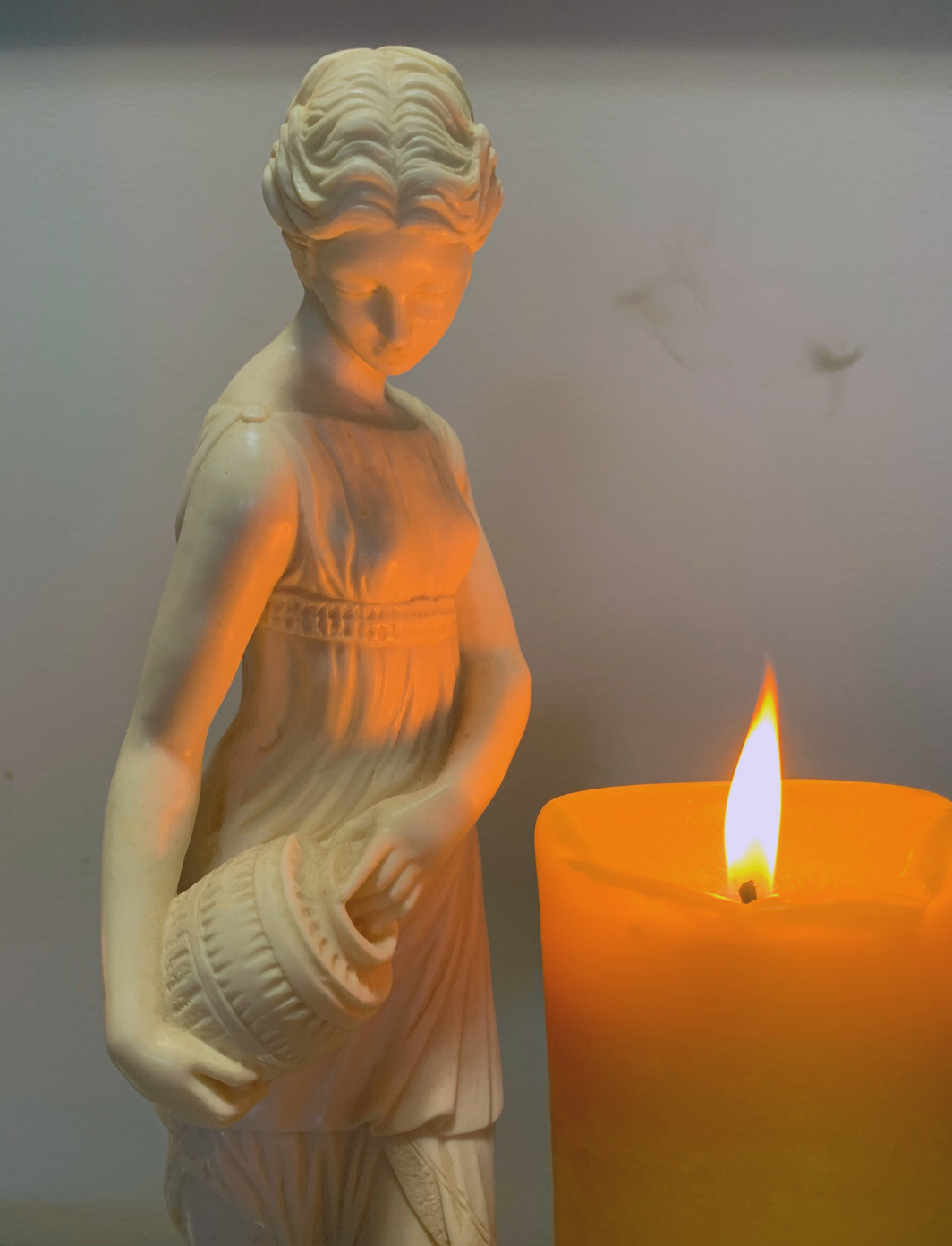
Because Vesta resides in the flame, a special candle that represents her sacred flame should be placed in a prominent position on your lararium.
Though this candle can be made of any wax, I suggest beeswax. This is because beeswax was typically used for candles by the ancients. Also, burning beeswax releases negative ions into the air, which in turn purifies the air. And Vesta is a purifying spirit.
If you do choose beeswax for your primary Vesta-dedicated candle, you should ensure that it is pure beeswax (not cut with soy or paraffin) for the best and purest burn. You should also ensure it is ethically sourced.
You can use a round, clear glass container to hold the flame, a tribute to the circular temple that once housed the sacred fire. If using a pillar candle, you can carve a ‘V’ into the wax to dedicate it to Vesta.
Ideally, you will use a candle with a wood wick that crackles when it burns, a sound the ancients believed was Vesta speaking.
Offerings to Vesta

In antiquity, mealtime and prayer offerings of bread or loose salted-flour were tossed into the household hearth or sprinkled directly into the sacred flame.
Doing so is an ancient way to connect with the goddess. An alternative is to place offerings in a bowl near your candle. This ensures a pure, clean and safe burn, while preserving your candle.
You can make these symbolic offerings to the sacred flame at mealtime, as well as during meditation, prayer or times of reflection.
You can also use the same kind of salted-flour wafers that the Vestals used to use for offerings and rituals. These can be created by mixing flour, salt and water and baking in the oven for a few moments. These wafers can be passed – cleanly and safely – over the flame as an offering to Vesta.
Libations to Vesta

A libation is a liquid offering. The decision of whether to make an offering or a libation is a matter of personal choice. Both the ancients, and people today, do both. The Vestals would have used one, the other, or both in a particular way for each particular purpose or ritual.
In antiquity, a libation of olive oil, milk or wine was sprinkled into the sacred fire in the hearth or in a candle’s flame. (Again, you may wish to place the libation in a bowl near your candle. This will preserve the wax, which is important for reasons you will read about below.)
Let Vesta’s Flame Symbolize the Soul
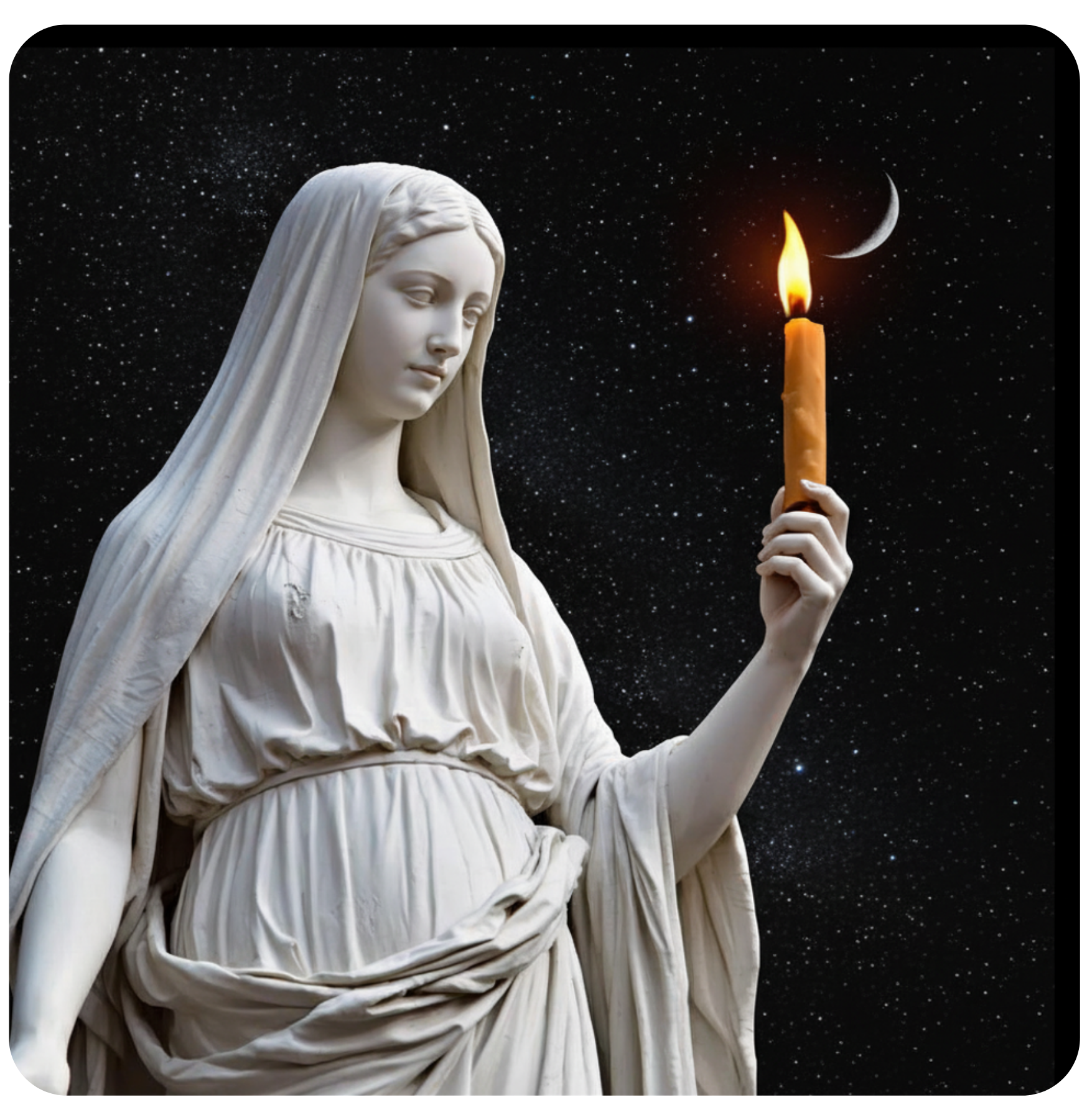
Fire has long symbolized eternity and the soul. When we want to connect with something greater, whether a higher power or the vast universe, we light a fire or a candle and we gaze into the moving flame… and we sense, instinctively, that we are connecting with the divine. We can see our own eternal spirit in the flame and know that it is part of something bigger.
A flame can also connect us with other things—perhaps a loved one who has moved on to connect with the divine in a larger sense. By lighting a candle and looking into the flame, we can see flickers of their spirit and we can feel their presence.
Light your special Vesta-dedicated beeswax candle in a dark, quiet room. Focus on the glow of the flame—which is vividly sun-like when cast by beeswax—and let it reassure you that your life is in the care of the goddess. Let the sweet fragrance of the beeswax—which is known to stimulate the pituitary gland, which in turn enhances intuition—reassure your inner-self that everything is all right. Your life is proceeding as it is meant to.
Candle Reading with Vesta’s Sacred Flame
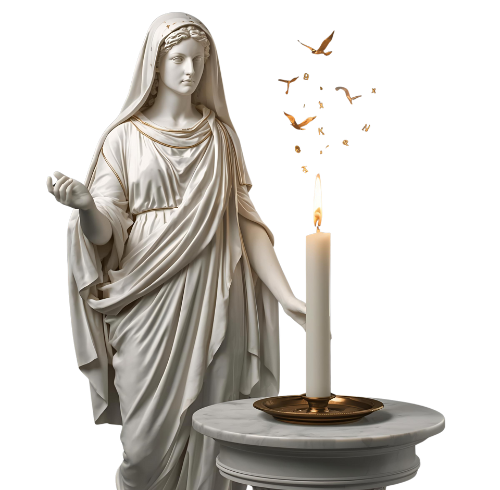
Just like reading the stars, reading the flame and wax drippings of a Vesta-dedicated candle can help you find answers to life’s many questions. It can help you reflect upon your past, present and future, so that you can live a truly illuminated life.
But as importantly, candle reading—particularly when rooted in ancient principles and practices—can help you both connect with Vesta and receive her guidance in a tangible way. After all, a candle is the new altar fire.
Because this ritual is so important, I have dedicated a whole page to it here at All Things Vesta. I hope you’ll spend some time reviewing it.
Use an Intention Candle
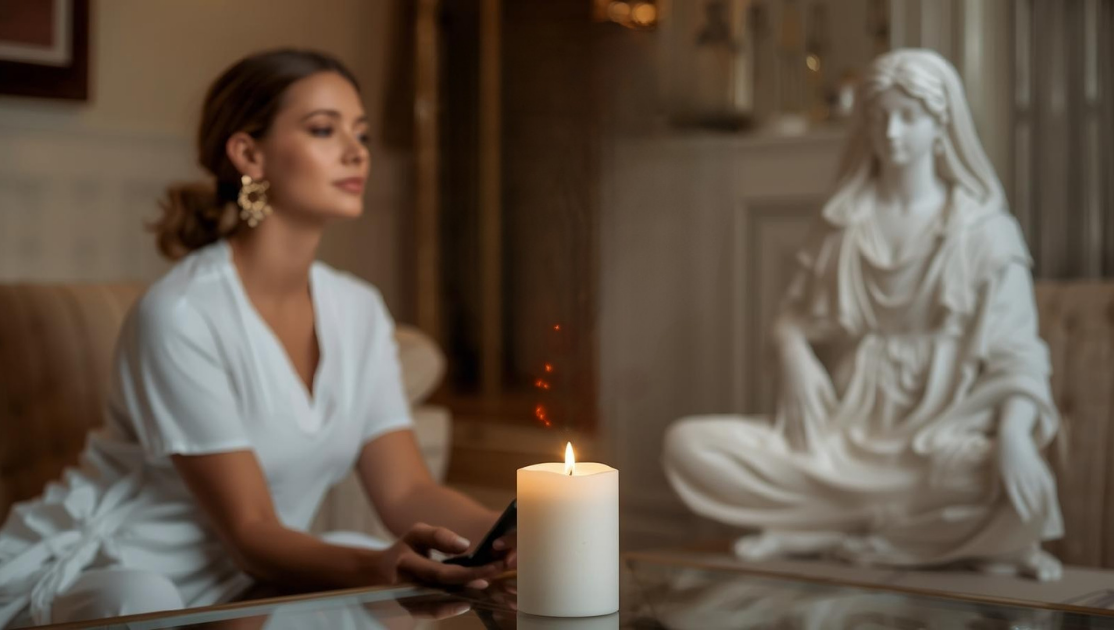
Right now, at this moment, there’s something you’re not happy about. There’s something in your life that is holding you back. There is something you really want or that is lacking.
Using an intention candle—especially one that burns with the Flame of Vesta—is a simple and beautiful spiritual ritual that can help you manifest good things in your life while also connecting with the goddess.
Observe Meaningful Dates from Antiquity
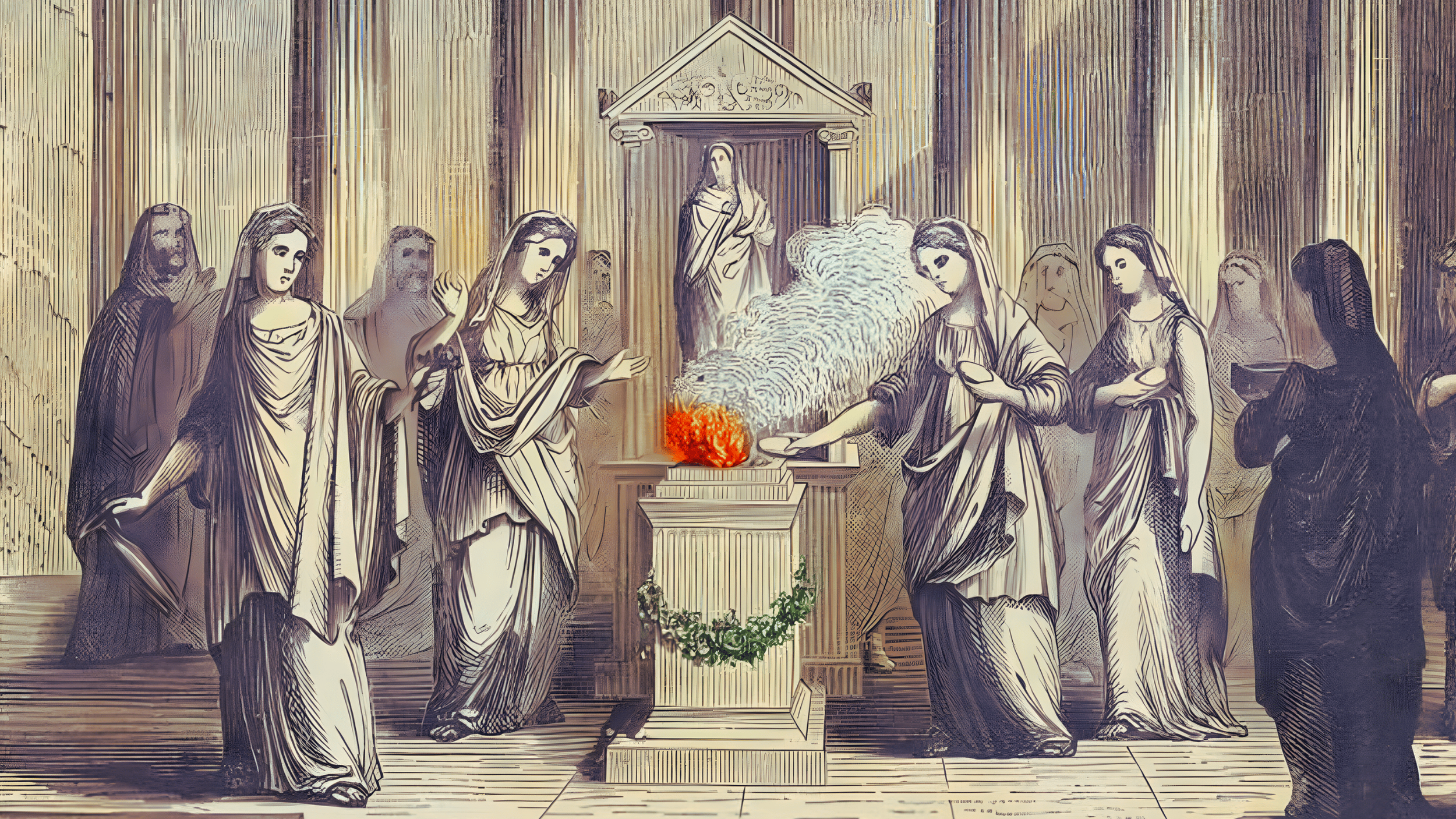
The Ancient Romans had a plethora of religious festivals that honored the gods. Two of the most important events that honored Vesta took place on March 1st and June 7 to 15.
March 1st was the date on which the Vestal priestesses ceremonially extinguished and then relit Vesta’s sacred fire in the temple. This is a great day to think about new beginnings.
June 7 to 15 encompassed the Vestalia, or the festival to Vesta. During this celebration, the inner sanctum of the temple was opened for women to enter and both observe and offer to the sacred hearthfire. On June 15, the temple was ceremonially cleaned. This period is therefore ideal for any cleaning or purifying that needs to happen in your life.
Read a Book
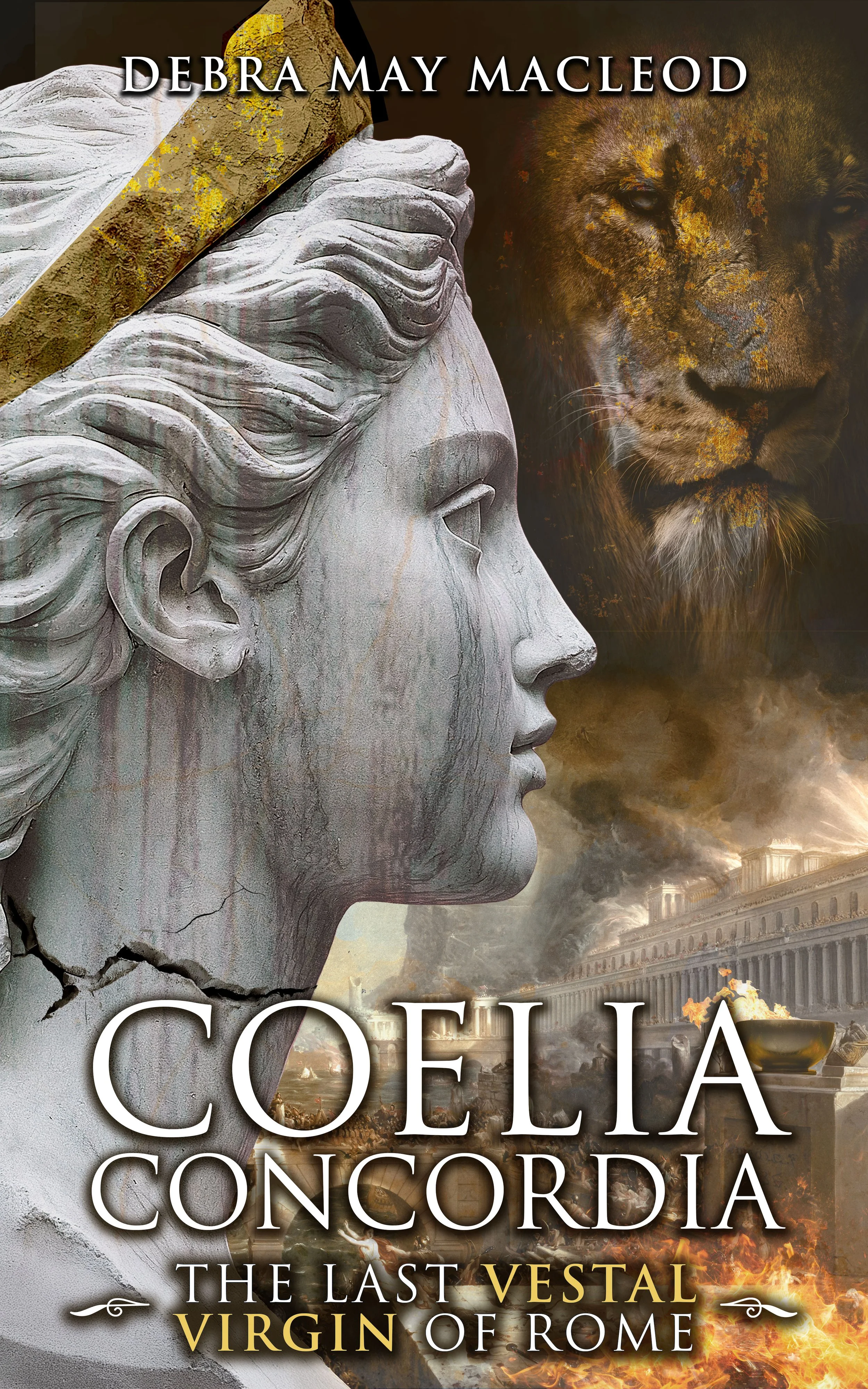
Immersing yourself in the ancient world, where Vesta’s fire first burned, is a powerful way to experience the history and rituals of the Vesta religion in an authentic, emotional way. It can certainly help you develop insight and a sense of reverence for it.
My historical fiction novels are a good place to start. The one pictured here (Coelia Concordia: The Last Vestal Virgin of Rome) is my seventh novel about the Vestals.


Star-Gazing
The temple of Vesta in the Roman Forum was designed in a circular shape to represent the orb of the sun, our planet’s star, as the source of all life.
You may wish to spend more time doing what the ancients did – looking up, into the sky, especially the night sky, to wonder at the universe (this V symbol, for example, is the symbol for the asteroid called Vesta). Locate the constellations and learn the Greco-Roman myths behind their names.
Also don’t forget that when you look up, you’re seeing the immortal gods. Mercury, Venus, Mars, Jupiter, Saturn… the ancient Romans named the planets after the gods, and some are visible with the naked eye.
Learn Myths & Legends

Nobody told a story like the ancient Romans – except maybe the Greeks before them!
Read about the ancient myths and legends the Vestals knew so well, and that we still tell today, from the Birth of Venus to the Fall of Troy.
In this painting, Perseus is confronting Phineus with the head of the Gorgon Medusa. Those who set eyes on it are turned to stone.
Burning Incense
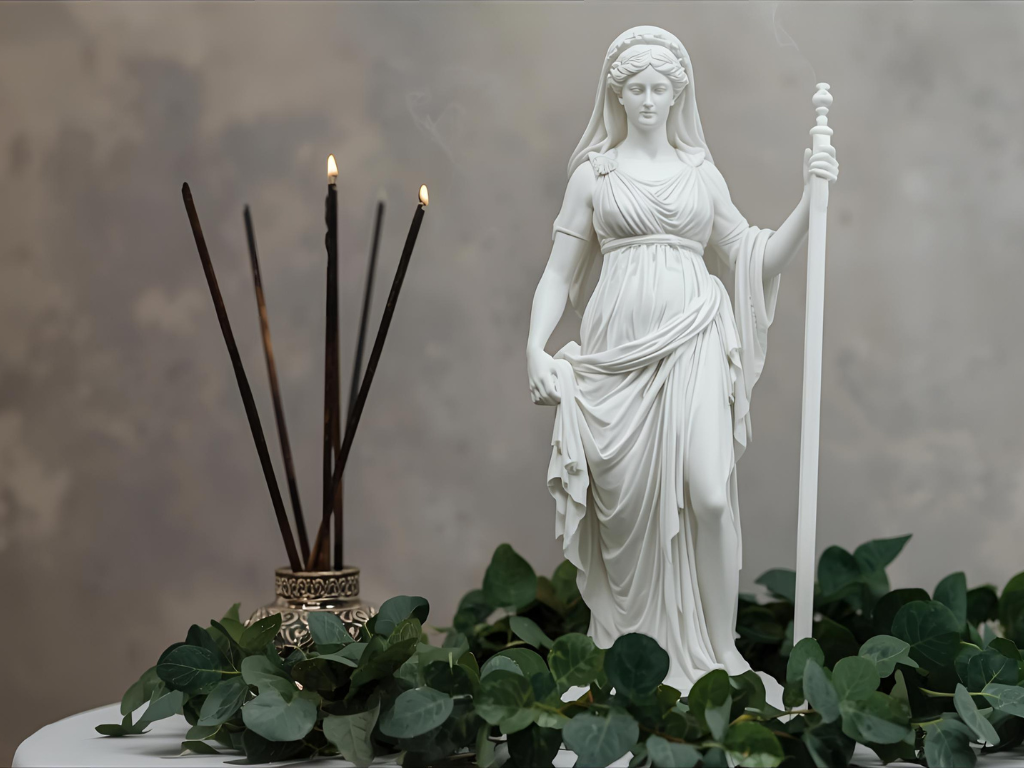
While most images or relief carvings we have of the Vestal Virgins show them tending to the sacred fire or making an offering into the flames, we know that the Vestal priestesses also burned incense to please the goddess with its fragrant smoke.
You can do the same. Frankincense was commonly used in religious rituals by the ancient Romans, as were imported incenses.
The Vestals also used other strongly fragranced items, like pinecones. That being the case, experiment with differently fragranced incenses to see which one seems to bring you the best fortune.
Let the Light Soothe You

A candle’s flame has always been a natural source of comfort. You can tap into that simple truth by just slowing down, taking some time for yourself, and burning a candle while you do.
A little self-care by candlelight (the pink flower petals in this picture allude to the pink roses that currently grow in the ruins of the House of the Vestals) can go a long way to soothe your spirit.
A Personal Symbol
The adherents of most religions wear some kind of personal symbol to reflect their faith, and those who honor Vesta and the old gods are no different. The personal symbol you choose should be just that—personal. You should wear whatever resonates with you and makes you feel connected to Vesta.
Some people like to wear ancient-styled jewelry, such as a glass-bead or gold necklace, brooch, pendant or bracelet. Affordable reproduction Roman jewelry is very beautiful and widely available for both women and men. Men in particular seem to like rings, especially intaglio rings with an image of Vesta engraved in the stone or soldier’s rings.
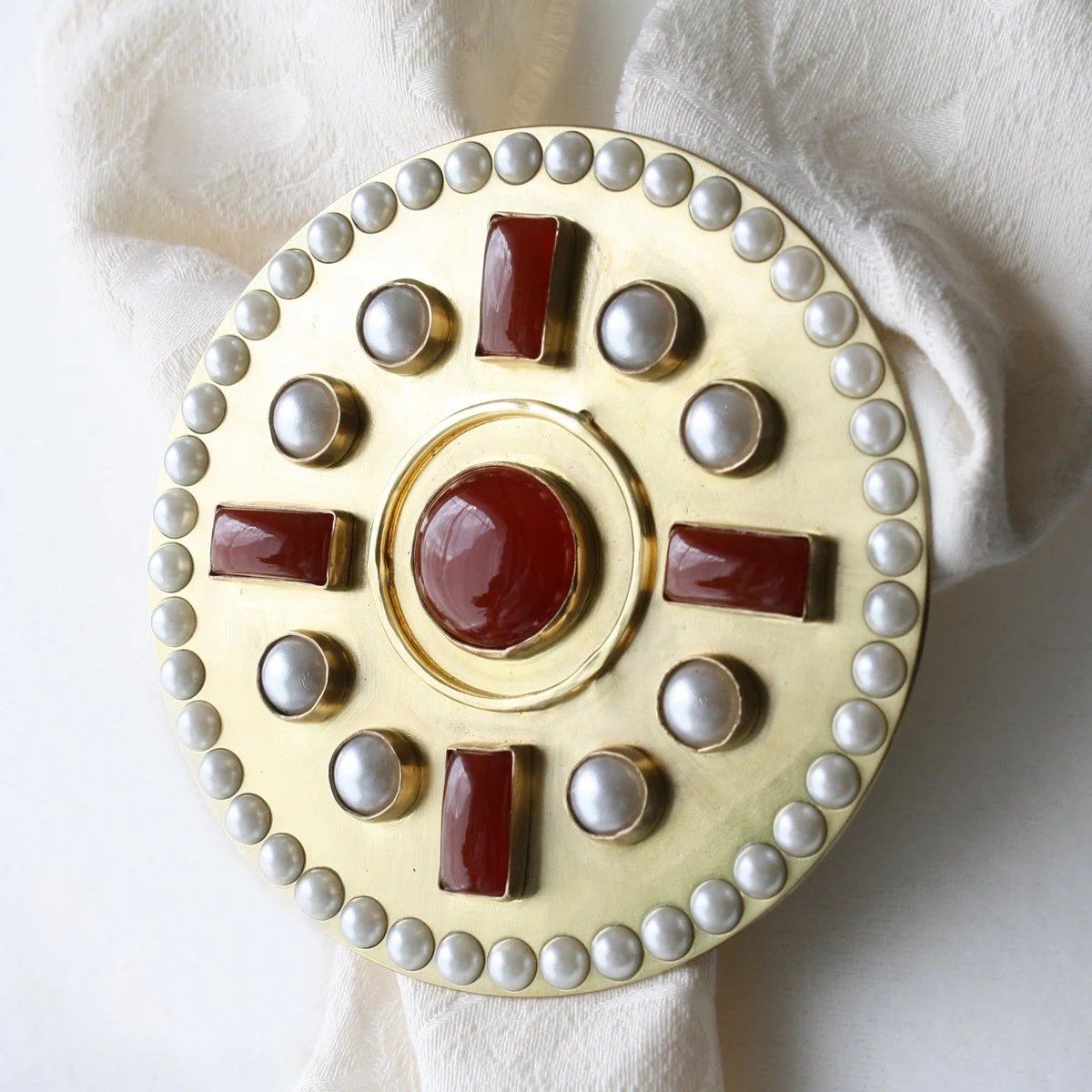
The photo I’ve included here is a reproduction I had made of a medallion worn by the late 4th century Vestalis Maxima Coelia Concordia (as depicted in a 16th century illustration of her excavated statue). You may wish to take some inspiration from it.
As you can see, red carnelian stones (representing the sacred fire) are arranged in a pagan cross formation. The central stone represents Vesta’s fire as the sun in the center, and the four rectangular stones represent the cardinal directions (north, south, east, west), as if Vesta’s fire is illuminating the whole world. The white pearls represent the Vestal priestesses tending to the sacred fire in the middle. If you want, you can follow this great Vestal’s lead and choose red and white gemstones or a pagan cross. My point is, you don’t have to stick to a simple V-shaped pendant—unless you want to! Enjoy finding a symbol that has meaning to you. (By the way, you’ll find a video on how I had this Vestal’s medallion recreated on the Videos page.)
And remember that your personal symbol can go beyond jewelry. Wearing the color white—whether a simple T-shirt or a scarf—can work too.
Spread the Flame


If you want to fill your home with Vesta’s glow and feel like you’re connecting with history and other like-minded people, check out the Spread the Flame page. You’ll learn more about my experience with Vesta and how I spread the flame… and how you can too!
Learn a Little History

Vesta’s history - all of ancient Roman history, really - is unique and uniquely fascinating. There is a remarkable conflation of history, legend and myth… the lines are often blurred. But that just makes it more interesting!
In any case, if you’re going to follow a spiritual path, it is always wise to learn a bit about its history. Visiting the ancient history page on this site can introduce you to Vesta’s beautiful beginnings.
Appreciate Art & Artifacts
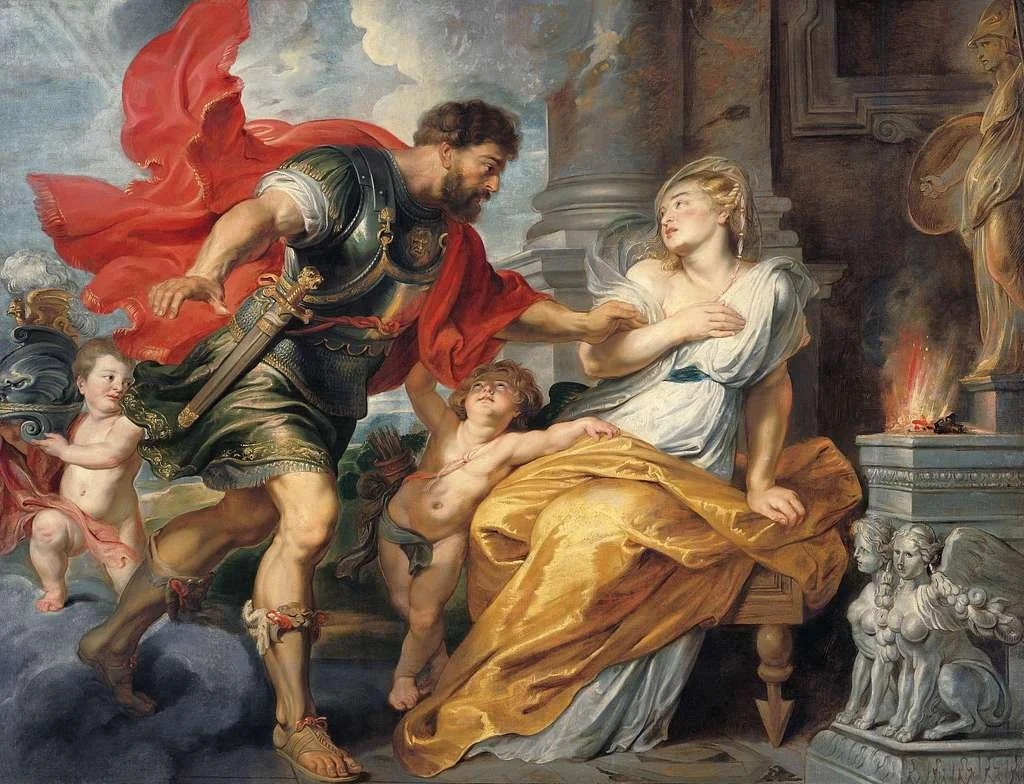
Because the history of Vesta and ancient Rome is so long and rich (there’s that conflation of historical fact, legend and mythology I referenced above), it has been the subject of countless works of art. There is the Classical art created in antiquity - frescos, statues, relief carvings, etc. - and then there is the art created in the centuries after, particularly during the Renaissance, when Classical art enjoyed a great revival. From the assassination of Julius Caesar to the birth of Venus, almost all of ancient Rome’s great moments and great figures are represented.
The painting I’ve shown here is an early 17th century oil on canvas called Mars and Rhea Silvia by Sir Peter Paul Rubens. It depicts the war god Mars visiting the Vestal Virgin Rhea Silvia by the sacred fire. He will impregnate her, and she will eventually give birth to twin sons, Romulus and Remus, the former of whom will become Rome’s founder. (Rhea Silvia is the central figure in my novel of the same name.)
But when it comes to ancient Rome, artifacts can also be art! They tell a story, and many are certainly beautiful enough. Another way to honor Vesta is to keep an eye on the latest archeological finds from the ancient Roman world. It wasn’t all that long ago, for example, that archeologists discovered what they believe may be the tomb of Romulus in the Roman Forum (near the Senate House). As the son of one of her priestesses, that certainly factors into Vesta’s story and may be of interest to those who honor her.
Here at All Things Vesta, I have compiled a nice gallery of beautiful artwork and artifacts for you to enjoy. Many of the images are interactive, so you can expand them to learn more.
And who knows? Maybe it’ll inspire you to hang a painting of the Vestals in your living room or even acquire an artifact of your own, perhaps a coin from the ancient world (there are many affordable ones). There is something very special about holding an ancient coin in your hand and knowing that someone long ago, someone who honored Vesta like you do, once held the same coin. The act is even more meaningful if the coin bears an image of Vesta, like the one I have shown here (Vesta is pouring a libation into the sacred fire).


Free Gift: This Pair of Devotional Cards to Vesta
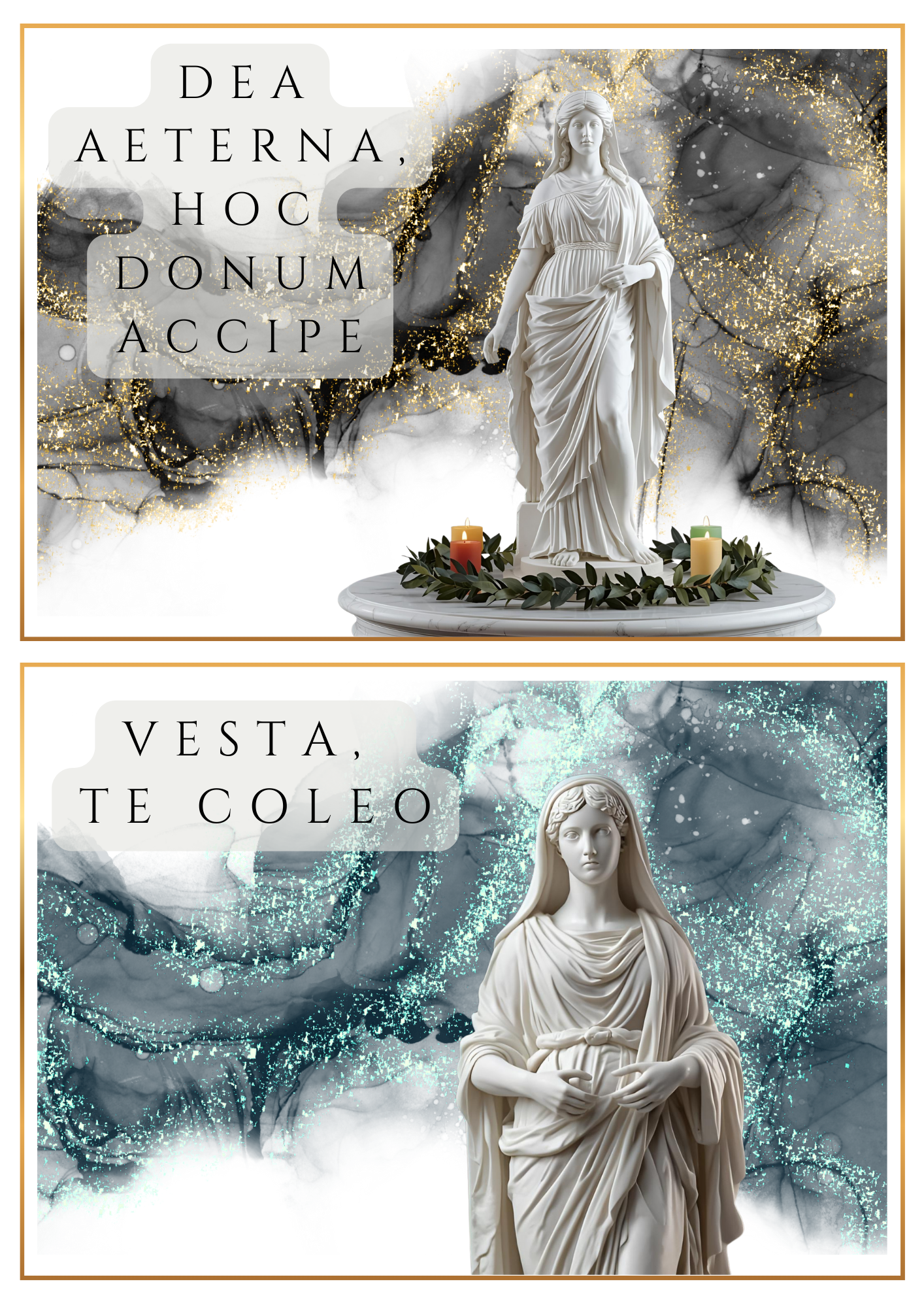
These stylish devotional cards each express a simple sentiment to Vesta in Latin (Latin to English translation key also provided). To me, there is something very special about speaking to Vesta in her first language. This pair of cards comes as a high resolution PNG zip file download (best for professional printing on 12 point gloss).