

ANCIENT HISTORY
The Spark of Vesta’s Sacred Fire…

…was lit well over a million years ago, when our ancestor hominids first marveled at the mystery of fire and learned to rely upon it for life itself.
In the beginning, they built a circle of stones around it. Then they built their homes around it. Eventually, they built their cities, civilizations and sacred temples around it.
Indeed, fire worship is the earliest form of “religion” known to humankind. It symbolizes the soul and eternity, and it gave birth to the beloved goddess the earliest Romans called Vesta. Represented by an Eternal Flame, Vesta burned in the household hearth. Her divine flame was the spiritual focus of the home and made it a sacred space within which to live. When the fire cracked in the hearth, it was believed to be the voice of Vesta herself, speaking or singing.
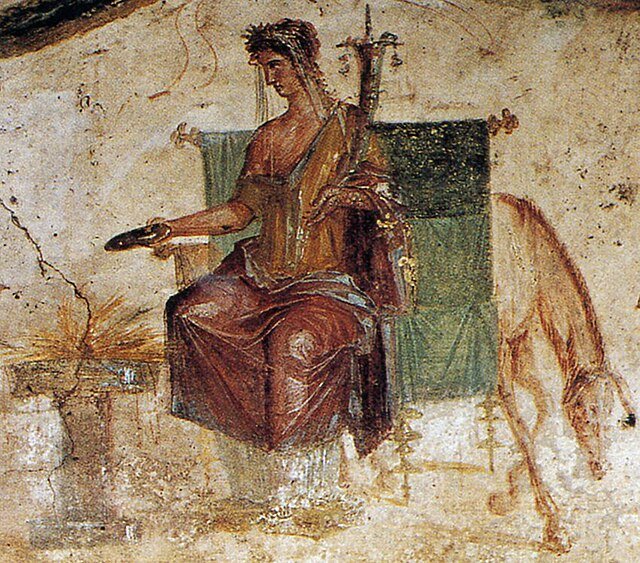
Ancient fresco of Vesta
Vesta is a virgin goddess….
… who rejected the advances of other gods and chose to remain a singular figure, as pure and purposeful as fire itself.
She is an ancient goddess, too, and was so even to the Romans. Her worship and her priesthood pre-dated the founding of Rome, and existed in other areas of the ancient world.
Vesta never required a living sacrifice. Instead, an offering of salted flour or a libation of olive oil, wine or milk was sprinkled into her flame.
The fresco shown here is an early and rare depiction of Vesta from antiquity - she was usually understood to exist as / in her sacred fire. It is a wall fresco discovered in the city of Pompeii.
How the ancients honored Vesta: public and private worship

In addition to being honored privately in the household, Vesta was honored publicly in a circular temple. It was one of the first temples to be erected in the early Roman Forum, and was the heart—the hearth—of Rome itself.
Inside the temple, burned a sacred fire: the Eternal Flame of Vesta.
The ancient Romans believed that as long as Vesta’s protecting fire burned in the temple—cared for by Vesta’s priestesses, the Vestal Virgins—Rome would survive whatever famines, plagues, invasions or political crises came her way.
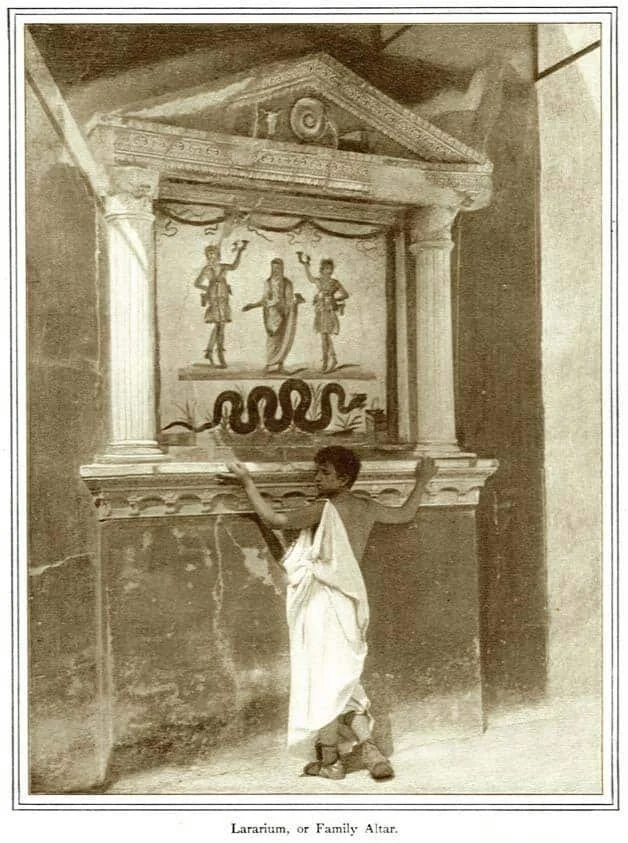
Privately, people also honored Vesta by burning a candle or oil lamp on their family shrine or lararium. The lararium was at the entrance to each home, so that Vesta could bless the comings and goings of family members. The lararium might also hold a statuette of Vesta, as well as the other household gods and meaningful items. In addition to offerings / libations during times of prayer or need, a family would honor Vesta at mealtime by tossing bread into their hearthfire.

A 3rd or 4th century bronze statuette of Vesta
Ancient Rome: Where history, legend and myth converge
Vesta was of central importance to Rome from its founding to its fall, and was intimately connected to Rome’s legendary and actual history.
Indeed, Rome’s legendary founder, Romulus, was the son of the Vestal Virgin (and princess of Alba Longa) Rhea Silvia by the war god, Mars.
As the (very abbreviated) story goes, Romulus and his twin brother Remus were taken from their mother by her enemies to be killed; however, they ended up being put into a basket and sent down the Tiber River.
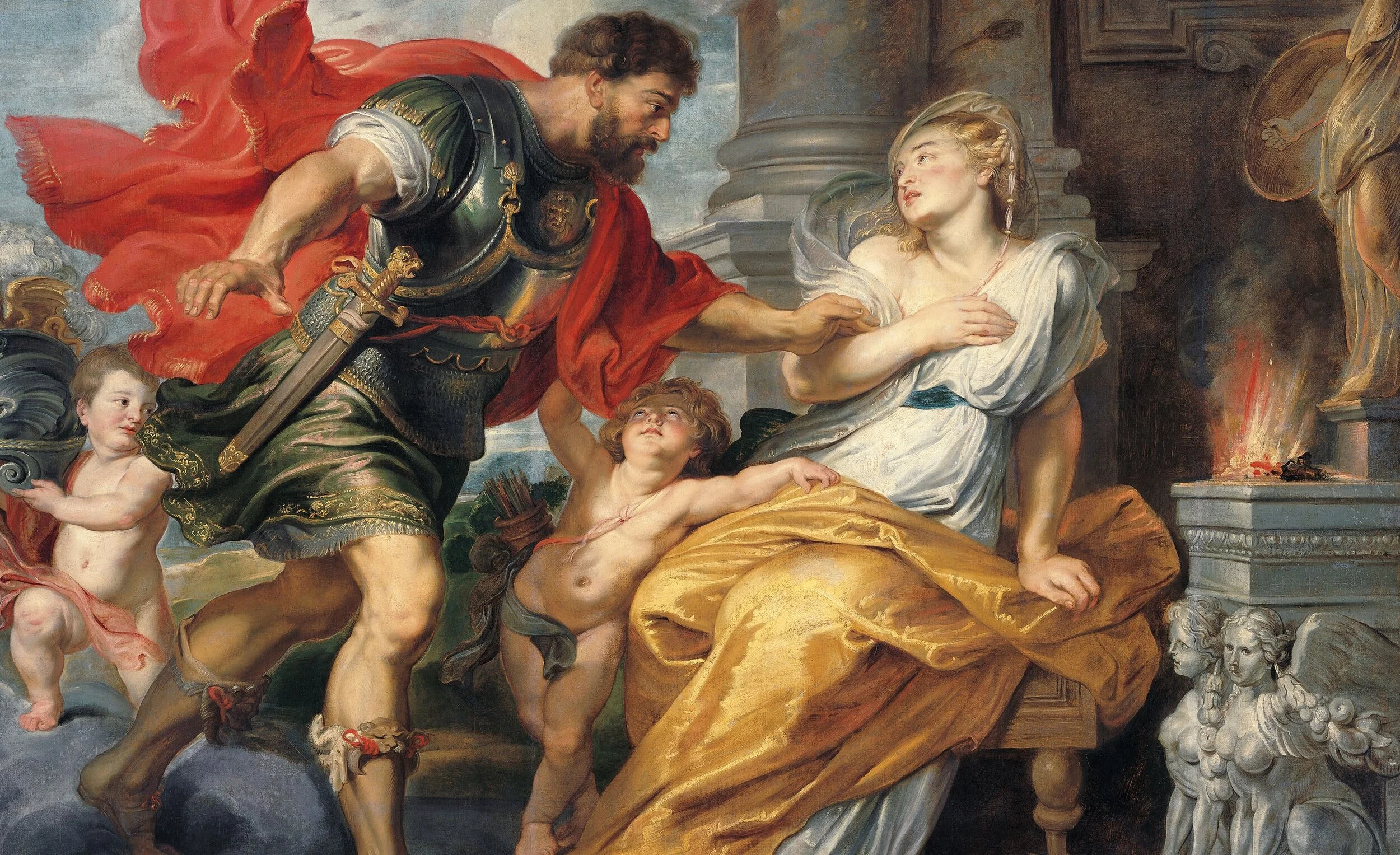
Mars approaches Rhea Silvia as she tends the fire of Vesta
They were eventually rescued by a she-wolf who nursed them, filling them with the strength and resourcefulness they would need to survive.
Eventually, the twins are found and raised by a shepherd. When they grow up, they discover their true royal lineage and decide to found their own city.
However, they fall into a dispute about where exactly to found it, and Romulus ends up killing his brother—and naming Rome after himself. (This history / legend is the subject of one of my novels: Rhea Silvia).

The Roman She-Wolf, or Lupa
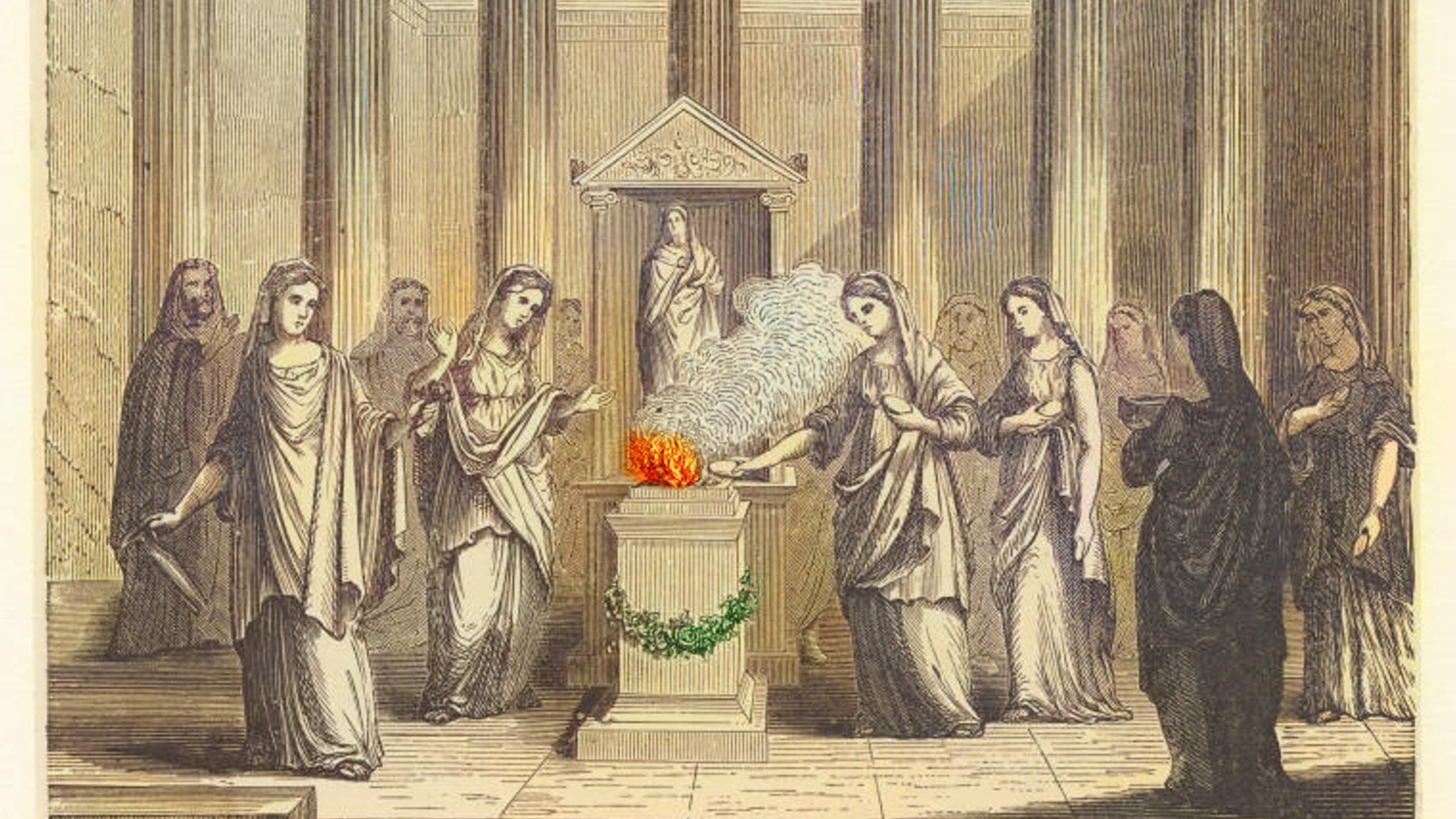
Because it was so important that Vesta’s sacred fire burned in her temple at all times, day and night, a priesthood of women was established to care for it. These were the Vestal Virgins, and their order was the only state-funded, full-time priesthood in Rome.

Priestesses of Vesta: the Vestal Virgins

Vestal Virgins, Raoux

Dedication of New Vestal Virgin, Marchesini
Vestals were selected as young girls from among the best families in Rome. To help them better commune with the virginal goddess Vesta—thus ensuring the protection of Rome—and because fire was regarded as a purifying element, Vestals took a thirty-year vow of chaste service to Rome.

House of the Vestals, Gatteschi
Vestals enjoyed luxurious lives. They resided in the palatial house of the Vestals, which was adjacent to the temple, thus allowing them to perform their sacred duties day and night.
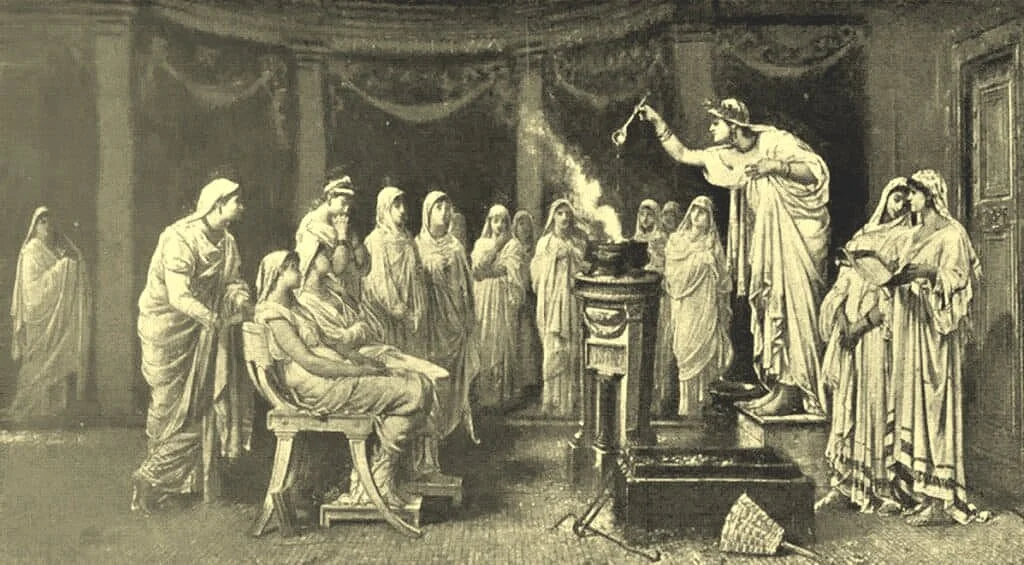
School of the Vestals, Leroux
One of their most important duties involved safeguarding vital items. One of these was the Palladium. This was a statue of Pallas Athena that the Romans believed their hero Aeneas saved during the fall of Troy.

Vestals reading the emperor’s will
Vestals were also tasked with safekeeping some of Rome’s most vital documents, including the last wills and testaments of its emperors, generals and senators, since Vesta’s temple was considered the holiest site in Rome—anyone who violated its sanctity would suffer the anger of the gods, not to mention the wrath of the Roman Empire and her people. It was an effective deterrent. It was also the duty of the chief Vestal to deliver the emperor’s will to the Senate upon his death.

The Vestal Virgins were also involved in the rites of other gods and goddesses, including Mars and the Bona Dea.
And just in case all of that wasn’t enough, they could be called upon during times of civil crisis to act as emissaries of diplomacy and peace.
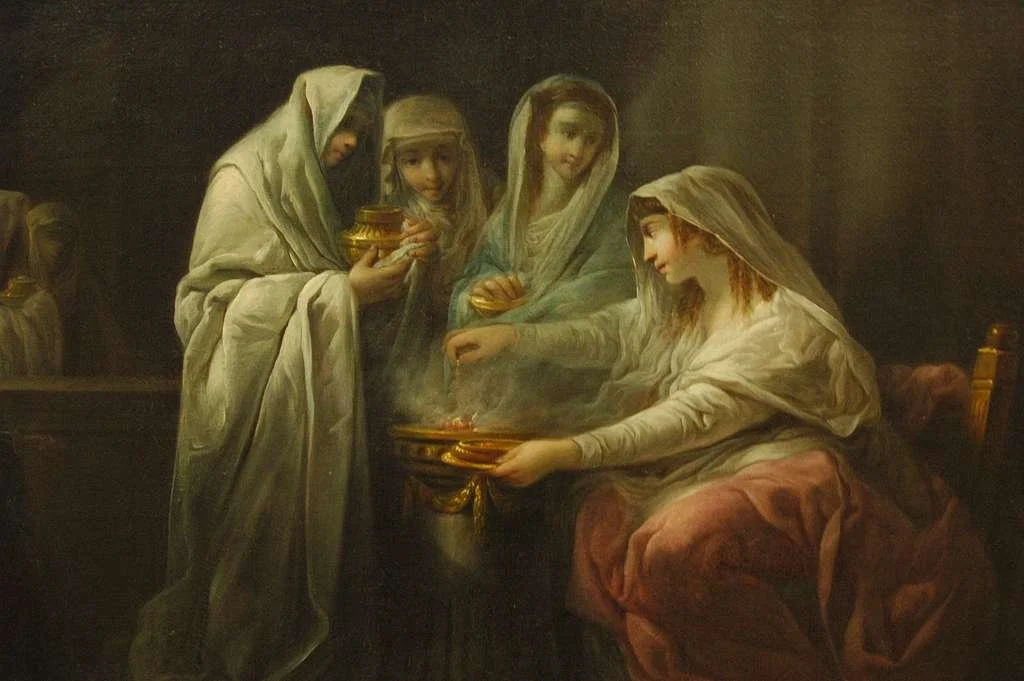
Yet the greatest duty of a priestess was, of course, to keep Vesta’s sacred fire burning in the temple’s hearth. It was also to spread Vesta’s fire by giving embers from the temple’s fire to other women who would take them home and burn them in their own household hearth. In this way, the Vestals continued to honor the private aspect of their public religion.

The Vestals enjoying front-row seating in the Colosseum
Vestals were educated and wealthy. Unlike other Roman women who lived under the legal control of a male family member, Vestals were independent and enjoyed rights and privileges that few women in the ancient world did. They were free to own property and even run businesses while serving as priestesses. Everywhere they went, they were were celebrated and revered by the people of Rome.

Section of Res Gestae
They were also respected, and often relied upon, by many of Rome’s emperors. The emperor Augustus, for example, extolled the virtues of the Vestal order and contributed vast sums of money to the order. This was considered important enough that he mentioned it in his memoir, the Res Gestae. (The relationship between Emperor Augustus and the Vestalis Maxima / chief Vestal of the time is a key aspect of my historical fiction trilogy The Vesta Shadows.)
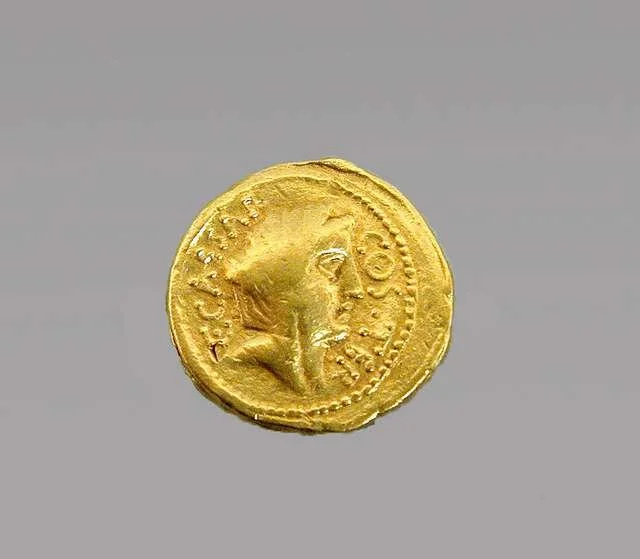
Gold coin with image of a veiled Vesta
It was common for emperors and other people of influence to mint Vesta’s temple, her priestesses or an image of the goddess herself on their coins. The coin shown here is a gold aureus of Julius Caesar with Vesta minted on the obverse.
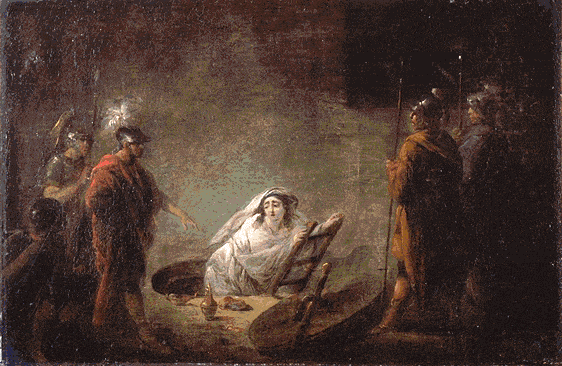
Condemned Vestal descending into pit
Yet despite her powerful religious position, wealth and the political and social influence she wielded, a Vestal’s privileged life was balanced by the threat of severe punishment should she break her vow of chastity. The Romans feared this would anger the gods and lead to Rome’s ruin. Therefore, a Vestal who had broken her vow was made to descend into a pit under the ground. A lid was sealed and she was essentially buried alive. This was a morbid yet very rare event, with only a handful of recorded cases during the many centuries the Vestal order was active. (To learn more about how this punishment can be reconciled with the status of a Vestal, you may wish to read the article Vestal Virgins: Feminism & Burial Alive.)
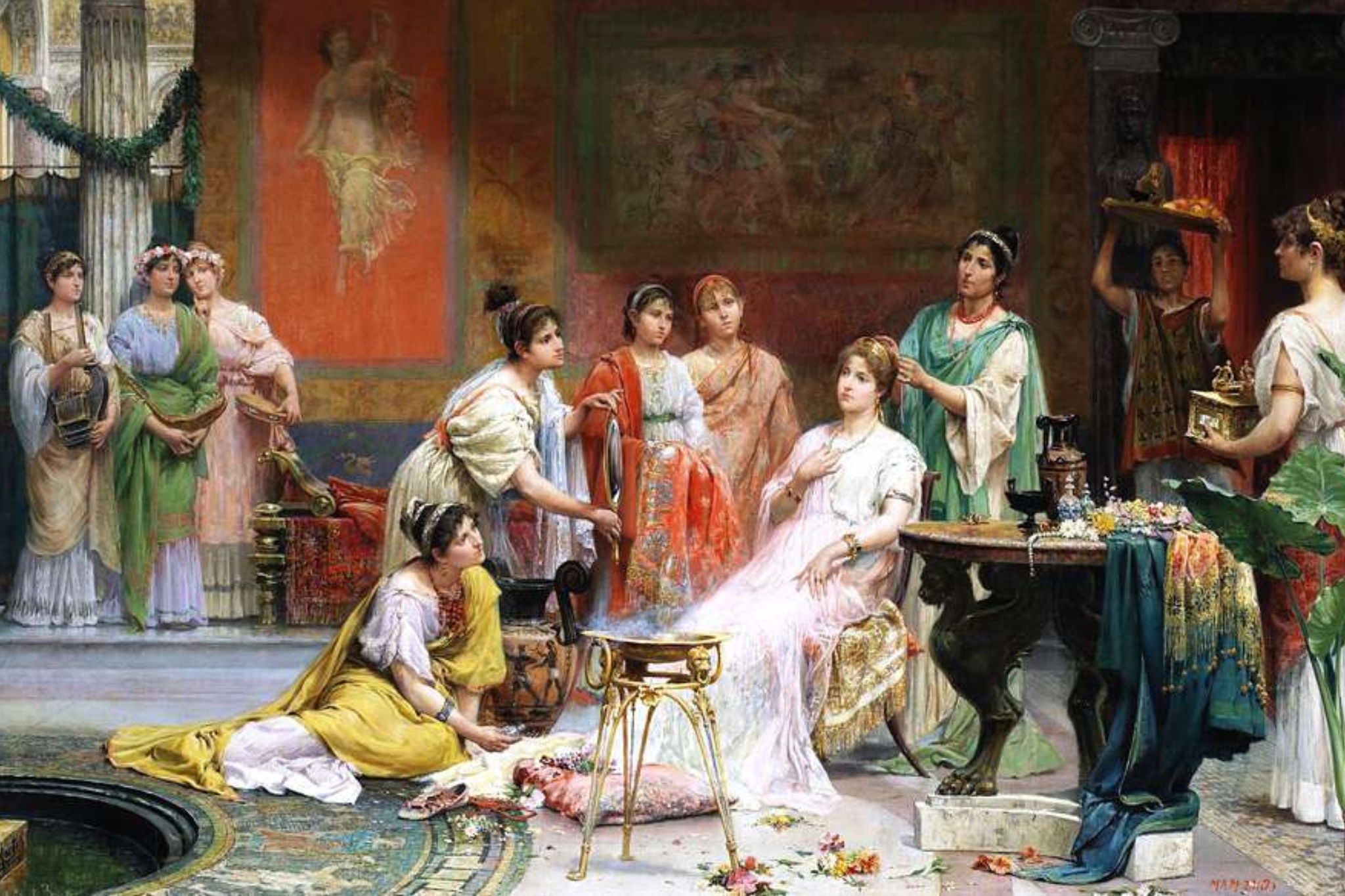
After their years of service to Rome, Vestals were allowed to retire. As most Vestals would have been in their late 30’s at the time of retirement, there was still plenty of time - and opportunity - to marry or even have children if they wished. Some no doubt did, yet others chose to stay with the order. The Vestal status may have been too appealing to part with.
All good things…
But as the saying goes, all good things must come to an end. And so it was with the Vestal order. With the rise of the first Christian emperors, influenced as they were by powerful bishops seeking to advance their own and the church’s power, the Vestal order was forcibly disbanded in the late 4th century CE. The emperor Theodosius’s laws against paganism ushered in an era of pagan persecution: there would be no more goddesses in Rome, and no priestesses to honor them.
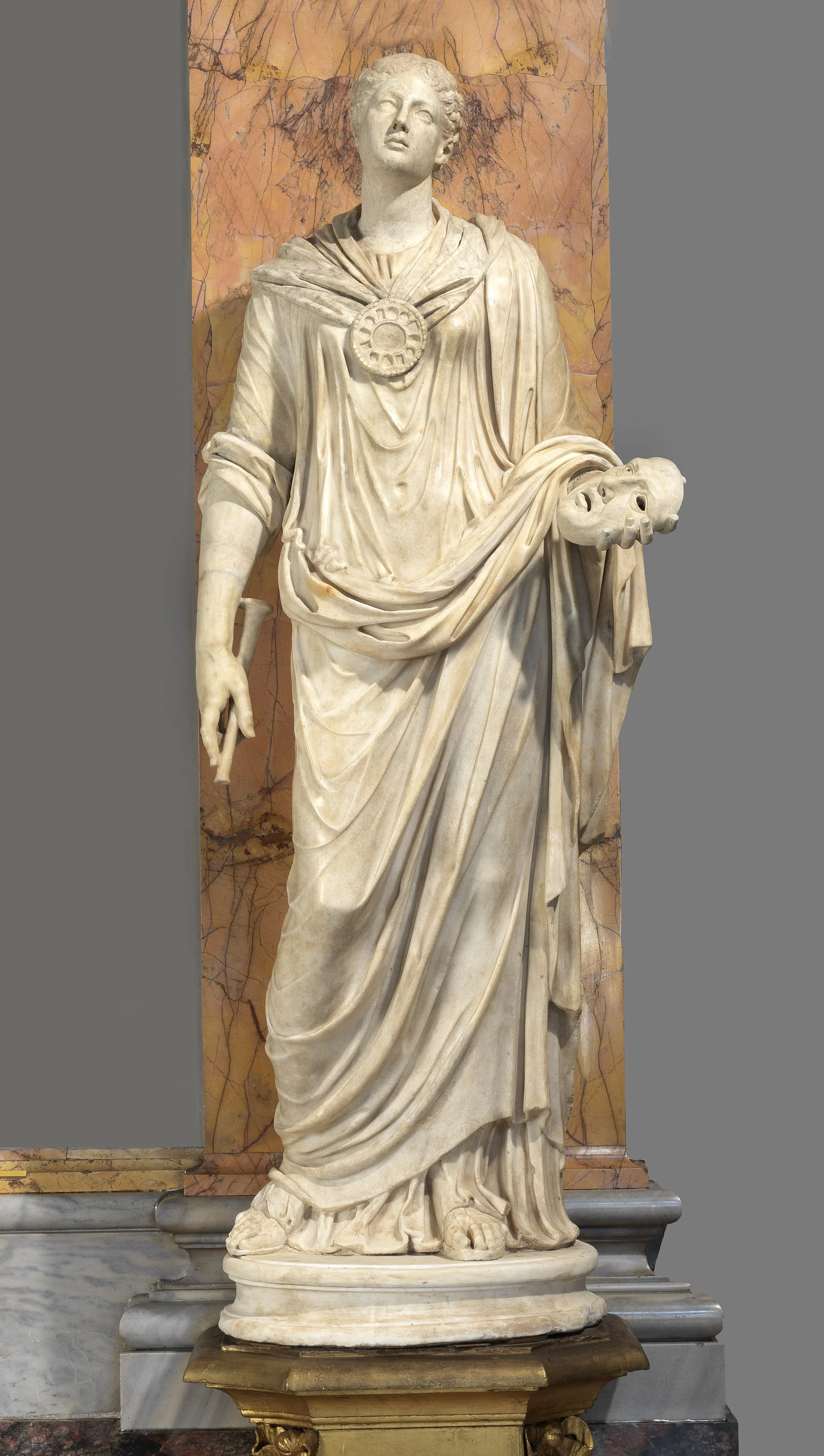
This is a statue of Coelia Concordia. She was the last Vestalis Maxima of the Vestal order.
This lovely photograph was provided to me by the Colonna Gallery in Rome where the statue is located: please note, however, that the statue was found headless. The head / arms / implements you see here were added afterward, and do not depict Coelia Concordia.
Coelia Concordia, and this world-changing time in Roman history, is the subject of my novel Coelia Concordia: The Last Vestal Virgin of Rome. The hypertext here links to an entire page on this website dedicated just to this remarkable woman.

Yet it’s hard to truly snuff out an eternal flame or thousands of years of religious practice and customs. The criminalization of paganism - and the punishments that befell those who continued to honor their own gods - was relentless and prolonged. It also involved a process where the church arrogated many pagan traditions. For example, nuns of the early church took many elements from the Vestal order, though with crucial differences in their religion and their role. If you want to learn more about this, you may wish to read the article How Nuns Replaced Rome’s Great Pagan Priestesses.
A brief look at a big subject
Of course, all of this is only a superficial look at the long, complicated history of the Vestal order in ancient Rome. It was—and still is—a beautiful religion, and fragments of its ancient past exist in the present.

Temple of Vesta, Roman Forum
You can visit the ruins of Vesta’s temple in the Roman Forum. It’s a remarkable experience to stand in front of the temple and try to imagine the sacred fire burning inside, the flames crackling and the smoke billowing out the oculus in the roof.

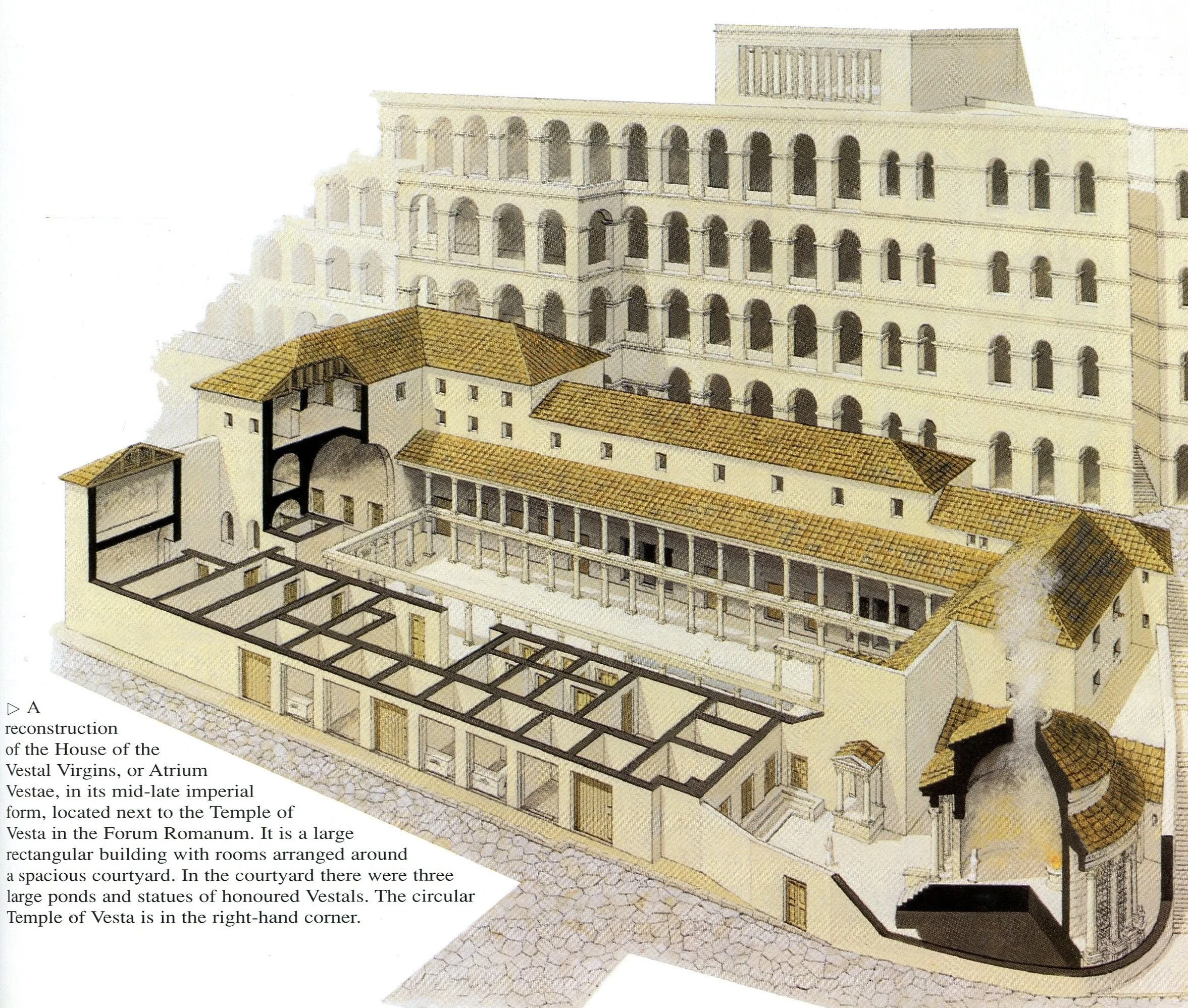
You can also visit the ruins of the House of the Vestals, just a few steps away from the temple. Here, you can see statues of Vestal priestesses who once lived within these walls.
And if you’re moved by such things, perhaps you can even light a candle in memory of their service to Rome’s fiery goddess, Vesta.

Statues of Vestals, House of the Vestals

Statue of a Vestal, House of the Vestals