
Let’s Talk Love and the Old Gods

It’s been bothering me for over thirty years now… something a professor said in an Introduction to Ancient Religions class when I was a young thing at university. He said something like, “The ancient Romans didn’t love their gods, not in the way that Christians love their god.”
Risking a C minus, a male student stood and asked, “How do you know that?”
I don’t recall the professor’s response. If there was one, it obviously wasn’t substantial enough for me to have registered it. It probably ran along the reductive lines of, “Well, their relationship with the gods was transactional. They’d offer to the gods in exchange for the god’s favor, and there were many rites…” From a distance, one could say the same thing about almost any religion, including Christianity, Suffer and fear god now, and he will reward you in heaven. Sounds pretty transactional to me.
The truth is…
… we cannot know the heart of a dead person who honored Jupiter any more than we can know the heart of a living person who honors Christ. What we can do, however—and what academia certainly needs to do—is stop sitting on a perch and unquestioningly parroting propaganda written by Christian bishops and apologists centuries ago.
These apologists did their best to ensure the world would see Christianity—its rise, its god—through a certain lens, one that blurs not just the unconscionable history of Christianity itself but also the nature of polytheism and traditional Roman religion.
Lies, hate and the loss of freedom
The vitriol with which men like Ambrose and Augustine wrote about the ancient gods—and the lies, distortions and hatred they spread with an impunity backed by the force of law—had a singular purpose: to raise up their god and bury all others at all costs, including by obliterating the freedom of religion and thought that Rome itself was founded on. That’s why it’s so important for people, and academics in particular, to put down the shovel and stop doing their work for them.
Of course there were / are differences in the ways that so-called pagans and Christians loved / love their respective gods, but to suggest that the ancients didn’t love their gods in a personal way is absurd. Anyone with even a passing knowledge of ancient literature and art can feel the love the Romans had for their gods and goddesses. They felt reverence for their gods, and turned to them in times of trouble and sorrow. No, it wasn’t all sunshine and roses, and the vices of the gods and goddesses often mirrored those of humans. Humans, like the gods, like nature, are complex. Indeed, that is part of the richness and beauty of traditional Roman religion and mythology. And certainly no one can absolve the god of the bible of some questionable actions and directives.
Traditional public rites
At the state level, the ancient Romans kept the peace and favor of the gods by performing public sacrifices and rituals with rigorous protocol, all against the backdrop of magnificent temples, shrines and altars. Here, the focus was on maintaining the pax deorum, the security and health of Rome, and the shared identity and purpose of its people. There is love in that.
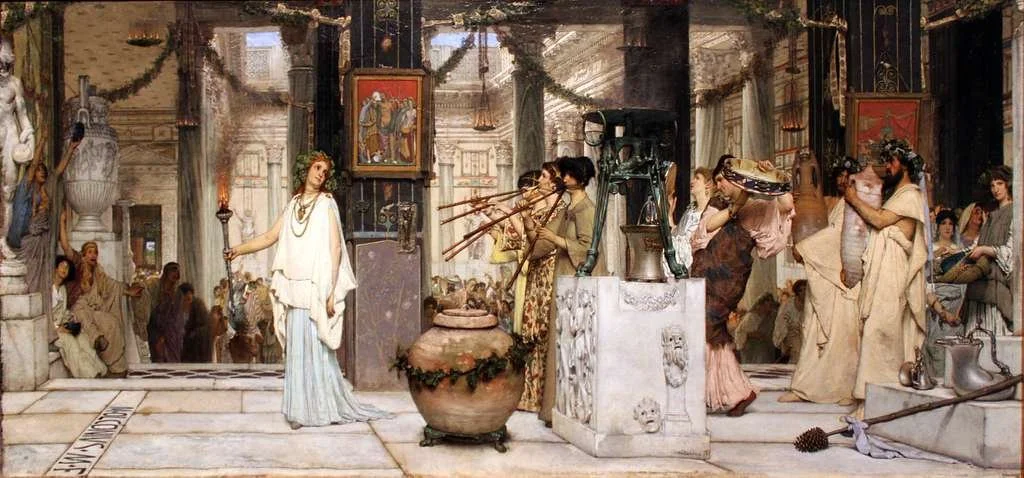
Ancient Roman pagan festival.
The home shrine
Yet the fact that every home held a lararium—a family shrine—shows love and devotion to the gods in a deeply personal way as well. At mealtime, people honored deities like Vesta by offering bread or flour into their hearth. When a person was ill, a statue of the savior Asclepius was brought in for comfort and healing. When a couple married, they did so at the altar of Juno, queen of heaven and goddess of marriage. When they fought—as all couples do—they prayed to Venus to restore their love. When the husband was sent off to war, they prayed to Mars to help him return victorious and in one piece.
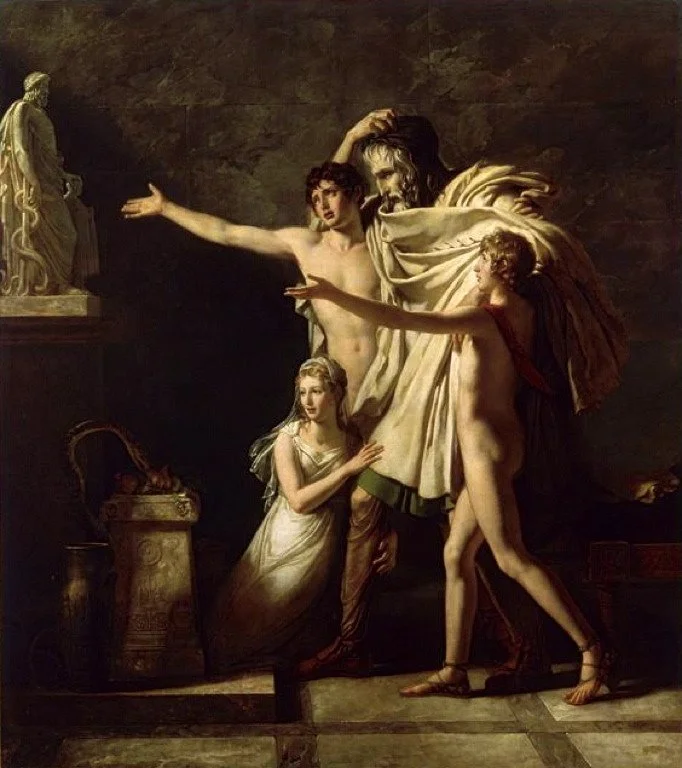
A family asking Asclepius to heal an elderly man.
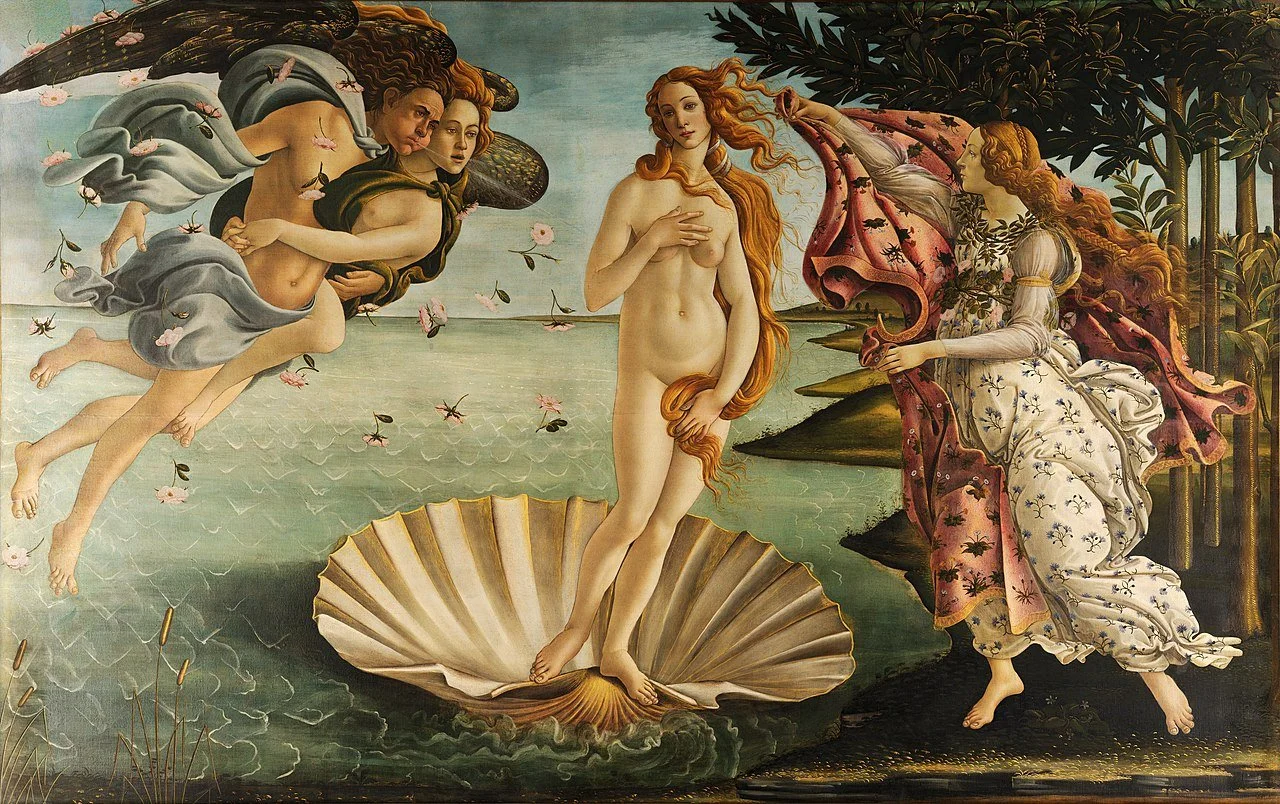
Botticelli’s famous painting of Venus, goddess of love, being born from the sea.
The gods were everywhere, in everything, and they permeated all aspects of life with their presence and their power. To say the ancients didn’t feel love for these divine beings smacks of the same egotism and small-minded assumption that people display when they say that animals don’t have feelings. It says more about the speaker’s ignorance—or agenda—than the heart of another being.
Yes, the ancients loved their gods
Not only do I believe that the ancients felt great love for the gods, I believe that they had a healthy and very natural relationship with those gods. Why wouldn’t they? These were the ancient customs of their polytheistic ancestors and their own land, not the doctrine of a monotheistic religion from the middle east. The Roman gods didn’t expect you to suffer in their name, didn’t see you as sinful, didn’t threaten you with eternal torment for not believing hard enough. The gods accepted you for who you were, and they were there for you—in a great pantheon of deities—through all the changing phases of your life, from birth to death. That richness is something the church tried to replicate with its battery of saints, but it could never be the same.
I also believe that many of the virtues in Roman society, those that existed alongside traditional Roman religion, were healthy and natural. And noble, too.
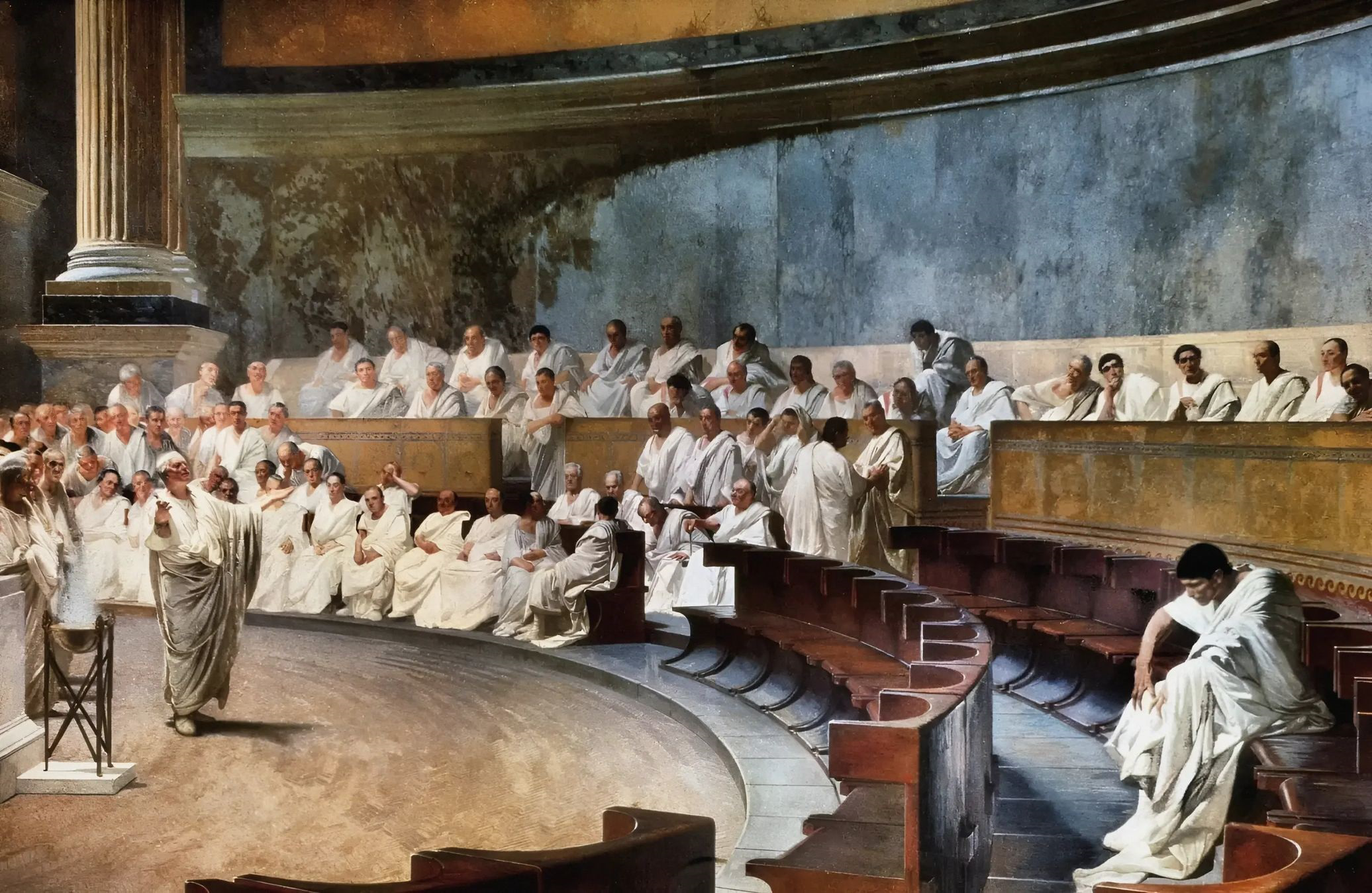
When someone today speaks of Christian values, they ostensibly mean things like devotion to one’s family, compassion, justice and so on. They don’t know—or don’t want to know—that Roman virtues were the same. The core virtues of a good Roman life were things like duty to one’s family and nation, personal integrity and wisdom, trustworthiness and mercy, hard work and wholesomeness. These aren’t Christian or biblical values. They are humanist values, and they existed long before Christianity.
Ancient Roman values: marriage, charity and - yes - compassion
It was the ancient Romans, imbued with their virtues and in the name of their gods, who were the first to legally enshrine monogamy in marriage in the Western world. It was the ancient Romans who, recognizing the natural balance in the divine, honored both gods and goddesses, and had both priests and priestesses. It was the ancient Romans who didn’t stop at building aqueducts to bring fresh water to every citizen, rich or poor, but who also built state-funded programs like child support, orphanages and the grain dole. Rich Romans knelt before their gods, and then donated mounds of coin in the name of philanthropy.
And I’ll pause there for a moment. Because that’s another aspect of Roman society that has been misrepresented. Even today, some people—including academics—assume that rich Romans only gave to charity to show off socially, not because they cared about their less fortunate fellow Romans. Believing this, my friends, is the height of gullibility and parroting. It isn’t just arrogant, it shows a profound lack of understanding of human nature. There have always been people who care about others and those who care about no one but themselves. Yesterday’s temples held both types, just as today’s churches do.
Pagan Rome: a place of progress and forward thought
The cruelties in the amphitheater, for example, were criticized by kind souls and forward thinkers in pagan Rome, including Seneca and Marcus Aurelius. Long before the rise of Christianity, Cicero’s compassion for the slaughter of elephants in the amphitheater was well known and his pity for the animals was echoed by many Romans. Many worried about the effects the games had on the spectators, and felt the games lacked virtue. No doubt these cruelties would have been curbed as times and philosophies changed, an evolution made more likely since Rome’s pagan gods didn’t explicitly give mankind “dominion” over the earth. A similar evolution would likely have occurred in other areas of society as well, including women’s rights.
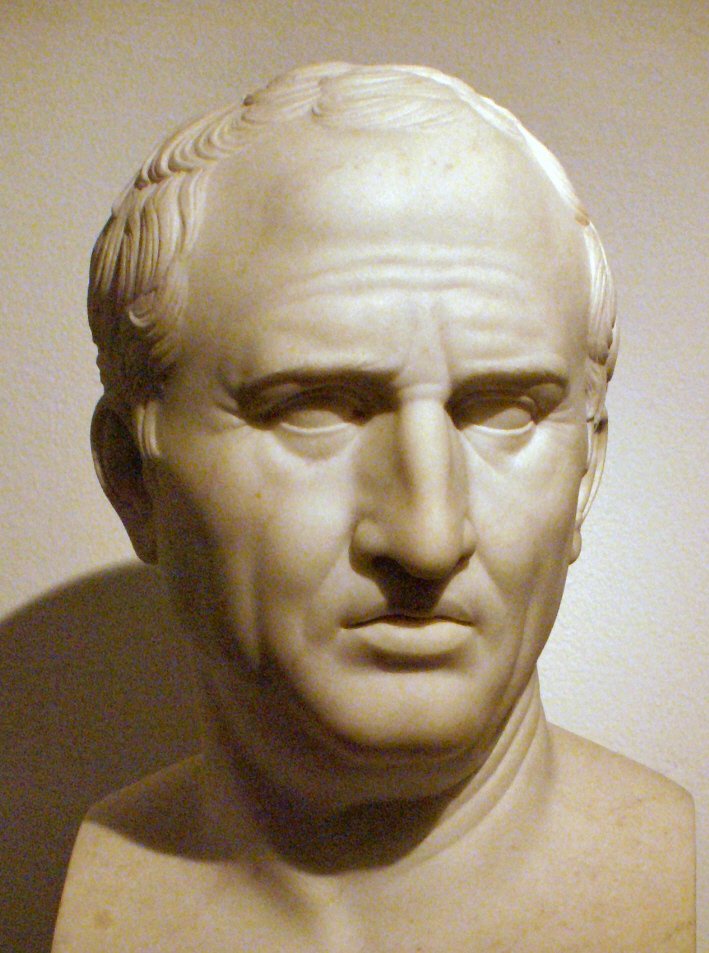
A bust of the great Roman statesman and orator, Cicero
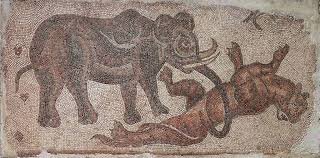
An ancient mosaic of an elephant battling a large cat
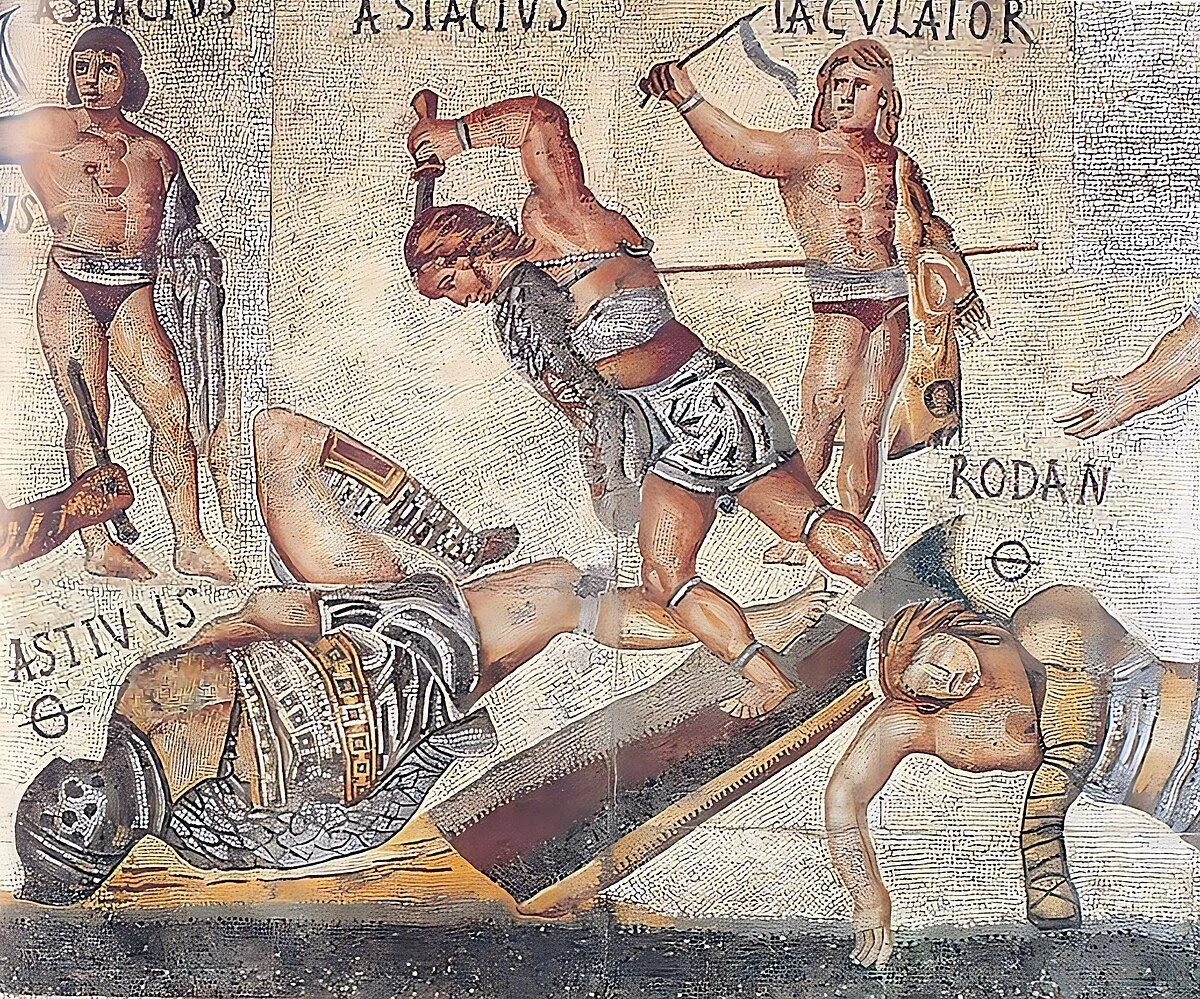
A mosaic depicting gladiator matches
Yet there were some biblical values that were much different than Roman ones, everything from religious intolerance and prioritizing a prophet over your family to terrifying your children with end-times prophecies and annoying your friends with sanctimonious proselytizing.
Indeed, these were the kind of things the ancient Romans despised. On top of that, there was nothing in traditional Roman religion that allowed the worst of humans to ascend to heaven via a tag-team of belief and forgiveness, while virtuous nonbelievers burned for all time. You couldn’t pray it away: if the gods did judge you, they did so based on your deeds, not your contrition. Yet for the most part, Romans just didn’t obsess about the afterlife or salvation in the same way. They focused on this life.
Amor vincit omnia
But back to love and the old gods. The topic came to me when I stumbled upon one of my favorite paintings. It’s a mid-17th century oil on panel that depicts Cupid (son of Venus) commanding Mercury, the messenger god, to announce the power of love to the universe. Because love conquers all.
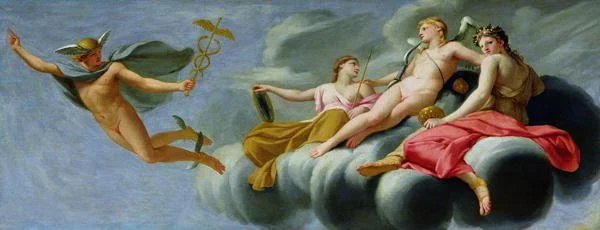
Cupid Orders Mercury to Announce the Power of Love to the Universe
You’ve heard that phrase—love conquers all. Amor vincit omnia. It was written by the great Roman poet Virgil in the early 1st century BCE.
Because the ancient Romans knew a lot about love. They loved their republic and later their empire. They loved their mothers and fathers, their husbands and wives, and their sons and daughters. They loved their pet dogs. They loved with a purpose and strength that built the greatest empire the world has ever known, and they did it all with love for the gods in their hearts.
And they loved to the very end
Even today, despite the severity of the Theodosian laws that criminalized paganism, despite the documented efforts of high-profile pagans to restore freedom of religion to Romans (and the unprincipled maneuverings of bishops to silence them), some academics continue to grip that shovel and deepen the hole that Christian apologists have been digging for centuries. They continue to bury the truth and parrot the falsehood that pagan Romans just didn’t put up that much of a fight to save their gods from being banished. After all, they didn’t love them, remember?
So I’ll leave you with just a few words of the letter that the celebrated pagan senator Symmachus wrote to the emperor, pleading for religious freedom:
It is right that whatever all cherish should be considered one. We see the same stars, the sky is common, the same world is ours. What does matter, by what knowledge one comes to the truth? By only one path, we cannot arrive at so vast a secret.
Whatever all cherish. They’re right there, in black and white. The words of a pagan man in the 4th century, fighting for the gods he loved.
Want to learn more about Symmachus and this time in history? Check out my novel Coelia Concordia: The Last Vestal Virgin of Rome.